 | |
Has the Iran War Damaged U.S. Economic Credibility?
The evidence from 2026 tells a more nuanced story than "damaged" or "undamaged"; it points to a currency and an economy under strain, propped up less by strength than by the absence of better alternatives.
The war has visibly hurt the real economy. GDP growth has slowed sharply; the economy grew at a tepid annualized pace of 1.4% in the final quarter of 2025, down from 4.4% the quarter before. And forecasters have marked down 2026 growth expectations accordingly.
Economic experts project the war could shave 0.3 percentage points off GDP this year, with growth slowing to 1.8% from 2.1% in 2025. Consumers are feeling it directly: gas prices have risen more than $1 per gallon since the conflict began.
Perhaps more corrosive to credibility, the pain hasn't been evenly shared. Spending has stayed resilient mainly because higher-income households, who hold more stock market wealth, have kept consuming even as the broader drag continues.
Economists also warn the deeper risk isn't the war itself but the uncertainty layered on top of tariff policy and an increasingly assertive foreign policy, which has raised open questions about whether inflation is temporary and how much conditions will squeeze the consumers who drive most U.S. growth.
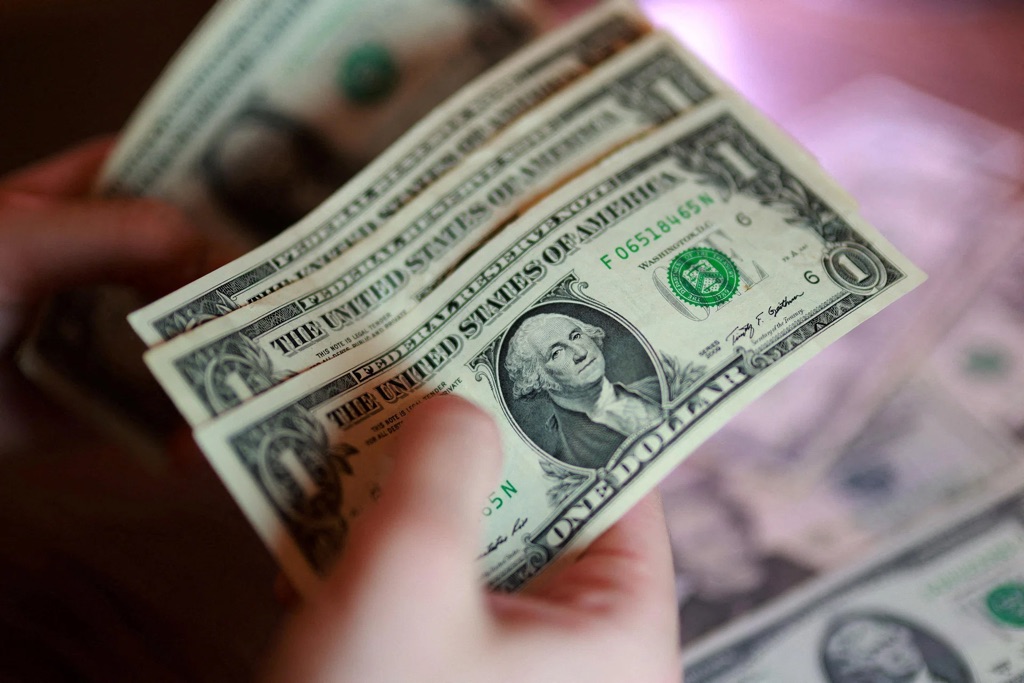
Longer-term, some analysts see the war reviving genuine doubts about dollar dominance, questions about whether the euro, gold, or digital assets could serve as alternative reserve assets have resurfaced amid concerns about unpredictability on trade, geopolitics, and fiscal policy.
Here's the counterintuitive part: the war has, if anything, reinforced the dollar's safe-haven role rather than eroding it. Since the war began, the dollar has been the only asset providing genuine safe-haven protection for global equities; gold, the Swiss franc, the yen, and government bonds all failed to deliver.
Foreign appetite for U.S. debt has held up too: even as China trimmed its Treasury holdings, Japan and Britain kept buying, suggesting sustained underlying confidence in U.S. assets. Structural advantages still matter more than headlines: the dollar's position rests on the size of the U.S. economy, the depth of its markets, and institutional credibility, pillars no rival currency can currently replicate, since building comparable infrastructure would take decades.
Call it strained, not broken. The war has exposed real vulnerabilities: slower growth, uneven consumer pain, a Fed navigating fiscal and political pressure, and a fresh round of "is the dollar's reign ending" commentary.
But markets haven't voted with their feet. The dollar's resilience during this crisis actually mirrors 2022's Ukraine shock: geopolitical shocks with inflationary consequences now systematically override the traditional flight-to-safety mechanics that once favored other havens.
That's less a triumphant reaffirmation of U.S. credibility than a reminder that the alternatives are worse. Credibility survived this war intact, but it was tested, and the fault lines it revealed, including fiscal strain, political pressure on the Fed, and uneven economic gains, will outlast the ceasefire.